How Old Do You Have To Be To Gamble? Legal US Gambling Age By State

If you are asking how old do you have to be to gamble, the simple answer is usually 18 or 21. The more accurate answer is that it depends on your state, the type of gambling, and sometimes even the specific casino or tribal venue.
In the United States, there is no single national gambling age for every activity. A person may be old enough to buy a lottery ticket in one state but still too young to enter a casino, place a sports bet, or play poker for real money.
That is why the legal gambling age can feel confusing. Some states allow certain gambling activities at 18. Others set the main age requirement at 21. A few states ban most forms of gambling altogether.
This guide breaks down the legal US gambling age by state, explains how casino and online gambling age rules work, and covers what can happen if someone tries to gamble underage.
How Old Do You Have To Be To Gamble in the US?
In most US states, you need to be either 18 or 21 years old to gamble legally. The exact age depends on the activity.
As a general rule:
- Casino gambling is usually 21, especially in commercial casinos.
- Sports betting is usually 21, although a few states allow it at 18.
- Lottery tickets are often available at 18, but some states use 21.
- Horse racing and pari-mutuel betting are often 18, but not always.
- Tribal casinos may set different age rules depending on state compacts and whether alcohol is served.
The key point is that “gambling age” is not one fixed number across the whole country. It is better to check the age for the exact activity you want to try.
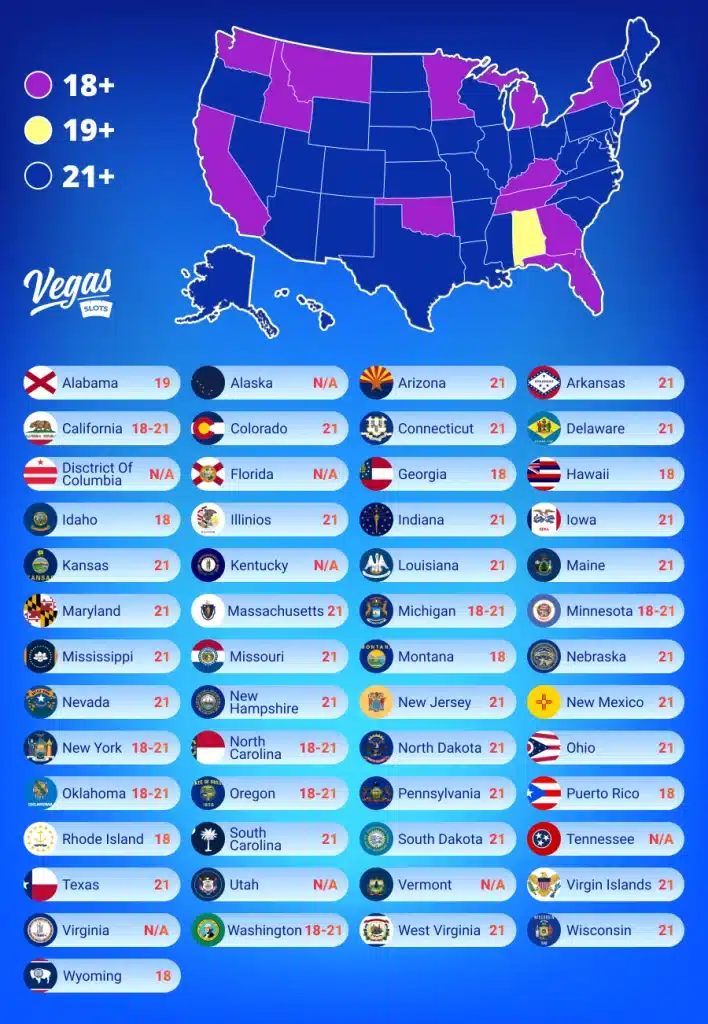
Legal Gambling Age by State
The table below gives a practical overview of the legal gambling age by state. Use it as a quick reference, not legal advice. State laws, tribal compact rules, and venue policies can change.
| State | General Gambling Age | Common Rule |
| Alabama | 19 / 21 | Limited gambling options; some tribal or pari-mutuel-style gaming may vary |
| Alaska | 18 / 21 | Limited tribal and charitable gaming; no state lottery or commercial casinos |
| Arizona | 21 | Casinos and sports betting are generally 21; lottery is 18 |
| Arkansas | 21 | Casino gambling and sports betting are 21 |
| California | 18 / 21 | Lottery and some tribal casinos may be 18; many casinos are 21 |
| Colorado | 21 | Casinos and sports betting are 21; lottery is 18 |
| Connecticut | 21 | Casinos, online casino, and sports betting are 21; lottery is 18 |
| Delaware | 21 | Casino and online casino gambling are 21; lottery is 18 |
| Florida | 18 / 21 | Lottery and some pari-mutuel betting are 18; casino gaming is usually 21 |
| Georgia | 18 | Lottery is 18; no legal casino gambling or sports betting |
| Hawaii | No legal gambling | Most forms of gambling are prohibited |
| Idaho | 18 / 21 | Lottery and some tribal gaming may be 18; venue rules can vary |
| Illinois | 21 | Casinos and sports betting are 21; lottery is 18 |
| Indiana | 21 | Casinos and sports betting are 21; lottery is 18 |
| Iowa | 21 | Casinos, sports betting, and lottery are generally 21 |
| Kansas | 18 / 21 | Lottery is 18; casino and sports betting are 21 |
| Kentucky | 18 | Lottery, horse betting, and sports betting are generally 18 |
| Louisiana | 21 | Casino, lottery, and sports betting are generally 21 |
| Maine | 18 / 21 | Lottery is 18; casino and sports betting are 21 |
| Maryland | 18 / 21 | Lottery is 18; casinos and sports betting are 21 |
| Massachusetts | 18 / 21 | Lottery is 18; casinos and sports betting are 21 |
| Michigan | 18 / 21 | Lottery is 18; online casino, casinos, and sports betting are 21 |
| Minnesota | 18 | Lottery, racing, and many tribal casino options are 18 |
| Mississippi | 21 | Casino gambling and sports betting are 21 |
| Missouri | 18 / 21 | Lottery is 18; casinos and sports betting are 21 |
| Montana | 18 | Lottery, sports betting, and many gambling options are 18 |
| Nebraska | 19 / 21 | Lottery is 19; casino gambling and sports betting are 21 |
| Nevada | 21 | Casinos, poker, and sports betting are 21 |
| New Hampshire | 18 / 21 | Lottery and sports betting are 18; charitable gaming rules vary |
| New Jersey | 18 / 21 | Lottery and horse betting are 18; casino, online casino, and sports betting are 21 |
| New Mexico | 18 / 21 | Lottery is 18; casinos and tribal sports betting are usually 21 |
| New York | 18 / 21 | Lottery and horse betting are 18; casinos and sports betting are generally 21 |
| North Carolina | 18 / 21 | Lottery is 18; casinos and sports betting are 21 |
| North Dakota | 18 / 21 | Lottery is 18; casino and tribal sportsbook rules are usually 21 |
| Ohio | 18 / 21 | Lottery is 18; casinos and sports betting are 21 |
| Oklahoma | 18 / 21 | Lottery and some tribal casinos may be 18; many casino venues are 21 |
| Oregon | 18 / 21 | Lottery is 18; casino and sports betting rules are usually 21 |
| Pennsylvania | 18 / 21 | Lottery and horse betting are 18; casino, online casino, and sports betting are 21 |
| Rhode Island | 18 | Lottery, casino gaming, and sports betting are generally 18 |
| South Carolina | 18 | Lottery is 18; no legal casino gambling or sports betting |
| South Dakota | 18 / 21 | Lottery is 18; casino and sports betting are 21 |
| Tennessee | 18 / 21 | Lottery is 18; online sports betting is 21 |
| Texas | 18 | Lottery, bingo, and horse betting are 18; no legal casino or sports betting |
| Utah | No legal gambling | Gambling is prohibited |
| Vermont | 18 / 21 | Lottery is 18; online sports betting is 21 |
| Virginia | 18 / 21 | Lottery and horse betting are 18; casinos and sports betting are 21 |
| Washington | 18 / 21 | Lottery is 18; tribal casino and sportsbook rules vary |
| West Virginia | 18 / 21 | Lottery is 18; casino, online casino, and sports betting are 21 |
| Wisconsin | 18 / 21 | Lottery is 18; tribal casino rules are usually 21 |
| Wyoming | 18 / 21 | Lottery and sports betting may be 18; casino venue rules vary |
How Old Do You Have To Be To Go to a Casino?
In many states, you need to be 21 years old to enter a casino gaming floor and play real money casino games. This is especially common in commercial casinos where alcohol is served.
That said, some tribal casinos and certain gambling venues allow players at 18. This is more common when the venue does not serve alcohol on the gaming floor or when state-tribal agreements allow a lower gambling age.
The safest rule is simple: check the casino’s official age policy before you go. Do not assume that the legal age in one state applies to another state.
Even if you are old enough to enter a casino building, you may not be allowed to stay on the gaming floor or place bets unless you meet the required gambling age.
How Old Do You Have To Be To Gamble in Las Vegas?
You must be 21 years old to gamble in Las Vegas.
That rule applies to casino games, slot machines, poker rooms, table games, sportsbooks, and most real money gambling activity in Nevada.
Las Vegas casinos are strict about ID checks. You may be asked for a valid government-issued photo ID before gambling, entering certain areas, claiming winnings, or using casino rewards services.
If you are under 21, you can still visit many Las Vegas hotels, restaurants, shows, and attractions. But you cannot gamble, sit at slot machines, hang around table games, or place sports bets.
Legal Gambling Age for Online Casinos and Sports Betting
Online gambling age rules also depend on the state.
In regulated US online casino states, players generally need to be 21 or older. This applies to legal online casino markets such as New Jersey, Pennsylvania, Michigan, Connecticut, Delaware, Rhode Island, and West Virginia.
Sports betting is also usually 21, although a few states allow legal sports wagering at 18. Kentucky and New Hampshire are common examples of states with lower sports betting age rules.
Legal online gambling platforms also use identity checks and geolocation tools. That means you usually need to prove your age, identity, and physical location before you can place a real money bet.
Be careful with offshore gambling sites. Some may accept younger players or claim to serve US users, but that does not mean they are legal, safe, or regulated in your state.
Where Can You Gamble at 18?
Several forms of gambling may be available at 18, depending on where you live.
Common 18+ gambling options include:
- Lottery tickets in many states
- Horse racing and pari-mutuel betting
- Charitable bingo or raffle games
- Some tribal casinos
- Sports betting in a small number of states
- Certain international gambling destinations
California, Minnesota, Montana, Kentucky, Rhode Island, and New Hampshire are examples of states where some gambling activities can be available at 18.
But this does not mean every casino, app, or sportsbook in those states accepts 18-year-olds. The rules can still change by product, venue, and operator.
Who Regulates Gambling in the United States?
US gambling is mostly regulated at the state level. Each state decides which gambling activities are legal, who can operate them, what licenses are required, and how old players must be.
Common regulators include:
- State gaming commissions
- Lottery commissions
- Racing commissions
- Sports betting regulators
- Tribal gaming authorities
Tribal casinos operate under tribal, federal, and state compact rules. These casinos can have different age requirements from commercial casinos in the same state.
Federal law also affects gambling. For example, online gambling, interstate betting, and tribal gaming can involve federal statutes, court rulings, and national enforcement rules.
That is why gambling law in the US is so fragmented. Two neighboring states can have completely different rules.
What Happens If You Gamble Underage?
Underage gambling can lead to serious consequences.

The exact penalties depend on the state, the gambling venue, and the situation. In many cases, underage gamblers may be removed from the property, have winnings confiscated, face account closure, or be banned from the casino.
Possible consequences include:
- Fines
- Loss of winnings
- Casino bans
- Closed online betting accounts
- Criminal or civil penalties
- Problems claiming prizes
- Trouble entering casinos in the future
Casinos and sportsbooks also face penalties if they allow underage gambling. That is why regulated operators take ID checks seriously.
Parents and guardians should also understand the risks. Underage gambling can create financial, emotional, and behavioral problems before a young person fully understands the consequences.
Why the Legal Gambling Age Matters
The legal gambling age exists to protect players, operators, and the integrity of the gambling industry.
Gambling involves real financial risk. Age rules help reduce access for minors and create a clearer line between legal adult gambling and underage activity.
For players, knowing the law helps avoid mistakes. For operators, enforcing age limits protects their licenses. For regulators, these rules help support safer and more responsible gambling markets.
Responsible Gambling Tips Before You Start
Being old enough to gamble does not mean gambling is risk-free.
Before placing a bet, set clear limits. Decide how much money and time you can afford to spend. Never gamble with money needed for rent, bills, debt payments, food, or family expenses.
A few basic rules help:
- Treat gambling as entertainment, not income
- Set a budget before you start
- Avoid chasing losses
- Take breaks
- Do not gamble while stressed, drunk, or emotional
- Use self-exclusion tools if gambling stops feeling controlled
If gambling becomes difficult to manage, seek help early. Support is available through national and state problem gambling resources.
Final Answer: How Old Do You Have To Be To Gamble?
In the US, you usually need to be 18 or 21 to gamble legally.
The most common casino gambling age is 21. Lottery and horse betting are often 18. Online casinos are usually 21. Sports betting is mostly 21, but a few states allow it at 18.
The safest approach is to check your state, the type of gambling, and the specific casino or online platform before betting.
If you are unsure, wait and verify. Gambling underage is not worth the risk, and legal gambling should always be responsible, controlled, and within the rules of your state.

Share this:



 Bonus offer: